International Women’s Day 2026 — Where Are We Now?

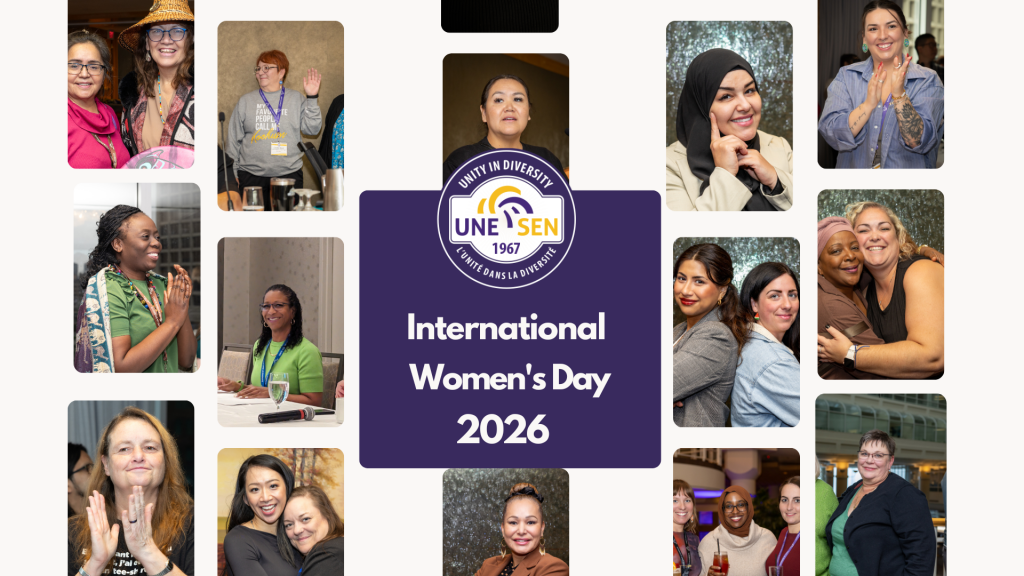
Every year on March 8, UNE joins a global movement that began more than a century ago — rooted in labour activism, collective struggle, and the fight for equality. International Women’s Day has never been only a celebration. It has always been a call to action.

In 2026, that call still matters.

Across UNE, women continue to shape our union through their leadership, their advocacy, and their everyday contributions. We are proud of the women who strengthen our movement — but pride alone isn’t enough. Equity requires action, solidarity, and honest conversations about where we are and where we still need to go.

Women remain an equity‑seeking group in workplaces across Canada, including within our own union structures. Progress is real, but so are the gaps. And while representation has improved, representation alone doesn’t guarantee equity. The work continues — on the shop floor, in leadership spaces, and in the everyday interactions that shape our workplaces and communities.

What Has Changed — and What Hasn’t

Across UNE, we’ve seen meaningful steps forward:

  • More women stepping into leadership roles
  • Stronger equity language in collective agreements
  • Growing awareness of gender‑based barriers
  • Increased visibility of Indigenous, racialized, 2SLGBTQIA+, and disabled women’s experiences

But we also see the ongoing challenges:

  • Pay inequity that persists across sectors
  • Disproportionate caregiving responsibilities
  • Harassment and discrimination that remain underreported
  • Barriers to advancement, especially for marginalized women
  • Workplaces that still default to systems built without women in mind

These realities remind us that equity isn’t a milestone — it’s a practice.

Equity is a union issue.
When any group faces systemic barriers, the entire labour movement is weakened. When we remove those barriers, we strengthen our collective power.

At UNE, solidarity means showing up for each other — not only when it’s easy, but when it requires reflection, learning, and change. It means listening to women’s experiences, believing them, and acting on what we hear. It means recognizing that gender equity intersects with race, class, disability, sexuality, and culture.

A Conversation Worth Having

This year, we’re inviting UNE members to reflect with us:

  • What does progress look like in 2026?
  • Where are the barriers still showing up?
  • How do we build a union where every woman — every sibling — can thrive?

These aren’t rhetorical questions. They’re an invitation to shape the future of our movement together.

Moving Forward, Together

International Women’s Day is a reminder that equity doesn’t happen by accident. It happens through collective action, shared responsibility, and the courage to keep pushing for better.

We’re proud of the women in UNE. We’re proud of the progress we’ve made.

We move forward when we move together.

Further Reading

Labour Day 2025

Labour Day is a day to honour the achievements of workers and the labour movement, and to recognize the ongoing efforts to improve fairness, equity, health and safety, and respect in the workplace.

We encourage you to take this opportunity to reflect on the importance of workers’ rights, the value of solidarity, and the progress that has been made through collective action.

Whether it’s attending a community event, learning more about the history of the labour movement, or simply taking time to rest and recharge, we invite you to mark the day in a way that is meaningful to you.

Wishing you all a safe and enjoyable Labour Day!

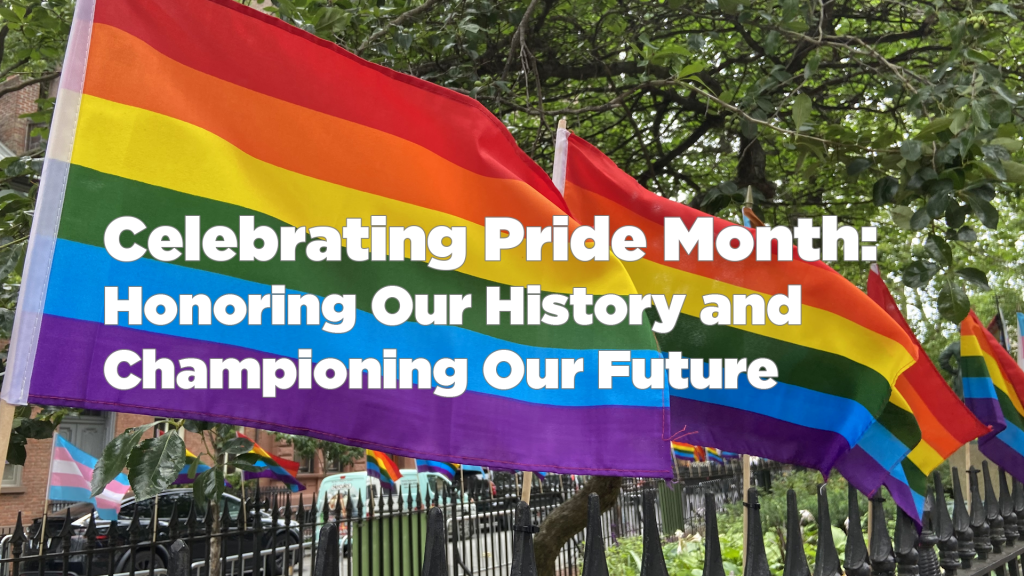
Celebrating Pride Month: Honoring Our History and Championing Our Future

As the Regional Human Rights Representative for Ontario with the Union of National Employees (UNE), it’s an honor to reflect on Pride Month and its profound significance. As a young Black woman and a member of our vibrant union, I am deeply aware of the intersecting struggles and triumphs that shape our collective journey towards equality and justice.

Pride Month, celebrated every June, is not just a time for festivity but a vital commemoration of a movement rooted in resistance and resilience. The origins of Pride trace back to the Stonewall Riots of 1969 in New York City, a pivotal event ignited by the relentless police harassment of the LGBTQ+ community. This historic uprising began at the Stonewall Inn, a sanctuary for many who were marginalized, particularly Black and Latinx members of the LGBTQ+ community.

It’s crucial to recognize the pivotal role that Black trans women played in the birth of the Pride movement. Marsha P. Johnson, a Black trans woman, alongside Sylvia Rivera, a Latinx trans woman, were at the forefront of the Stonewall Riots. Their courageous defiance against systemic oppression sparked a movement that demanded visibility, respect, and equality for all LGBTQ+ individuals.

Marsha P. Johnson’s legacy is a testament to the power of intersectionality in activism. She reminded us that the fight for LGBTQ+ rights is inherently linked to the struggles against racism, sexism, and economic inequality. Today, as we celebrate Pride, we honor her contributions and the countless others who paved the way for a more inclusive society.

For UNE and its members, Pride Month is an opportunity to reaffirm our commitment to human rights and social justice. Our union has always been a staunch advocate for the rights of LGBTQ+ members, recognizing that a truly equitable workplace is one where diversity is celebrated, and everyone is free from discrimination and prejudice.

As a young Black woman within UNE, I am inspired by the rich history of intersectional activism. It motivates me to continue advocating for policies and practices that support and uplift marginalized communities within our union and beyond. From fighting for inclusive workplace policies to supporting LGBTQ+ members facing discrimination, our collective action is crucial in advancing the rights and well-being of all workers.

Pride Month is a time to celebrate how far we have come, but it also serves as a reminder of the work still ahead. By honoring the origins of Pride and the contributions of trailblazers like Marsha P. Johnson, we recommit ourselves to the ongoing struggle for justice and equality. Together, we can create a future where every individual, regardless of their gender identity, sexual orientation, race, or ethnicity, can live and work with dignity and pride.

In solidarity,

Des Hicken
Regional Human Rights Representative, Ontario
Union of National Employees (UNE)

International Francophonie Day – #MyMarch20

By the Francophone Committee

On International Francophonie Day, the Francophone members of the Union of National Employees (UNE) want to tell you how the permanent Francophone Committee was created within our Union.

It was in 2008 at the National Component Convention in Toronto—today UNE—that this initiative began to take root in the minds of some Francophone members of our Union, following the bad treatment of one of Canada’s two officials languages. Two years went by before concrete actions were taken.

On Saturday, August 14, 2010 at the Human Rights Conference held in Saskatoon, further to the dissatisfaction of Francophone participants, it was agreed to gather some 15 members of the Union to address problematic situations and try to find fair and equitable solutions to them. Daniel Kinsella, the National President at the time, was invited to attend this meeting. This is how the first Francophone Committee meeting took place.

Some situations that occurred during this conference were deemed unacceptable and drove Francophones to act. Here are some examples:

– Once the French electronic registration to the Convention was completed, the computer program always redirected us to the English site;
– The Saskatoon Coop travel agency offered neither bilingual nor French services;
– The names of some Francophone participants were badly written on the pass identifier;
– The workshop facilitators were not bilingual. The supporting documents were only available in English;
– During workshops, non-bilingual Francophones had to share the services of one single interpreter;
– The lack of simultaneous interpretation at the caucuses and elections;
– The journalist in charge of press was a unilingual Anglophone. When the person he would interview would answer in French, he would cut the conversation short and say “Sorry, I don’t speak French.”

Faced with these numerous findings, the first objective of the committee was to become a permanent committee that was an integral part of the Union’s structure. The National President gave his approval to this initiative.

This is how, during the 2011 National Convention in Saint-John, with the support of a resolution received from the floor of the Convention and adopted by the members present, the creation of UNE’s first permanent Francophone committee took place.

Since its creation, this committee has continued to promote and defend the use of the French language in the operations, activities and events of our Union, as well as everyday society. The major presence of UNE at the various demonstrations supporting Franco-Ontarians last fall—protesting the cuts in French services in Ontario by the Ford Government—illustrates this commitment.

The Committee ensures the representation of a Francophone member in the steering committees of every national conference and convention. A Montreal-based firm is also responsible for translating documents and makes sure that the translators are Francophones. The W.E. Travel, whose services have now been retained by UNE, offers its services in both official languages.

The Francophone Committee wants to thank the people who took the decision to create a Canada-wide Francophone Committee: Louise Patrice, Jean-Pierre Ouellet and Daniel Toutant, as well as the precious contribution of Georges St-Jean, Technical Advisor, and Nicole Clermont, for her administrative support, as well as the entire UNE team for the support and efforts made to make sure that services provided by our Union are done in both official languages of our country.

Happy Francophonie Day!

The Francophone Committee

Discrimination in the federal public service; one member’s story.

A Union of National Employees member shares a personal experience of discrimination as a member of the LGBT community and its lasting impact.

Greetings,

In light of the Prime Minister of Canada’s apology on November 28th regarding the federal government’s discriminatory practices toward the LGBT community, I wish to share my own personal experience with you and encourage other federal government employees to get on board with the class action.

At the end of the 70s, I applied to a competition open to university graduates at Foreign Affairs for foreign assignments. During the ensuing RCMP security investigations, I declared, in good faith, that I was homosexual.  Following the investigation, they refused to add me to the list of candidates for a position in the department. Through the Access to Information Office, I put in a request to have access to the investigation report. The entire report was essentially positive, but certain portions were struck out.  I then communicated with people who had been contacted during the investigation only to realize that the struck-out information was linked to confirmation of my sexual orientation. I called upon the Human Rights Commission and it rendered a positive decision against this discriminatory situation. Thereafter, the Department of Foreign Affairs accepted to put me on the list of candidates, but a few months later the list was eliminated. I never got the chance to work there.

On the strength of my master’s degree in International Relations, I resolved to work with various community organizations — the only positions available to me at the time. It wasn’t until 2000, at the age of 45, that I finally attempted once again to enter the federal public service. I then obtained a position at Human Resources and Social Development Canada. Six years later, in 2006, I got the opportunity to transfer to the Canadian International Development Agency and, thereafter, to Global Affairs Canada during the amalgamation of the two departments.

Such a long road travelled… from the initial competitive process when I was discriminated against to my entry at Global Affairs Canada. Thirty-three years have gone by!  Due to the missed opportunity of getting into my department at the end of my university studies, here I am, in my early 60s, having to work until I’m 65 years old to obtain a decent pension and this despite my 24 years of seniority. I can’t complain as life has nonetheless been good to me. However, I simply wanted to state what impact these discriminatory decisions have had on my life’s course.

I am convinced that many of you have also had a career path made more difficult due to the prevalence in the past of discriminatory policies within the federal government. Therefore, I encourage you to do the same thing as me and take part in the class action.  This obviously will not be a solution to everything. However, it will provide some compensation for the difficulties we have encountered.

I thank you for hearing out my testimony!


Harper Stopped

HarperStoppedv02

After ten years of cuts to government services, lies about security and climate change, disrespect to indigenous people and deception to Canadians on so many other levels, voters stormed the polls and finally put a stop to Stephen Harper and his conservative regime. Canada has voted to stop the cuts.

“It has been obvious to our members and it became obvious to Canadians during this election that parliament was broken, ruled by a secretive and dishonest government,” said UNE national president Doug Marshall. “We hope to work with the incoming government to establish positive labour relations and hold the Liberals to the promises they outlined in their party’s platform.”

Some of those promises we will watch closely include:

  • Restoring a public service where employees are respected and valued
  • Increasing taxes for our country’s highest earners
  • Increasing the funding for needed infrastructure projects
  • Establishing an inquiry into missing and murdered aboriginal women
  • Repealing various anti-worker and anti-union laws

The Union of National Employees is prepared to work with the new government in order to achieve positive change for Canadians and a strong and effective public service.


Canadians voted for change

PSACPostElection

PSAC calls on new Parliament to restore public services and repair relations with federal public service employees

OTTAWA –Canadians rejected the Harper Conservatives and voted for change on October 19 and that is good news for Canada, says the Public Service Alliance of Canada.

“The new Liberal government has a strong mandate for change,” said PSAC National President Robyn Benson. “That change needs to include restoring public services and building a positive relationship with the federal public service.  We call on the Liberals to practice a new kind of politics and to work collaboratively with the NDP and other progressives in Parliament to put Canada back together again.”

Before and during the election, the PSAC carried out a public information campaign to convince Canadians to vote to stop the cuts made by the previous Conservative government. A poll carried out just before polling day found that a large percentage of Canadians believed the cuts would affect the election outcome.

“We know from our own campaign work that voters were fed up with the Harper Conservatives’ attacks on the public service. As the largest public service union, we look forward to sitting down with the new government as soon as possible to discuss how to repair the damage done including how to improve labour relations in the federal public service,” said Benson.

The Harper Conservative government passed successive omnibus bills in its last four years fundamentally changing collective bargaining laws, as well as health and safety protections for federal workers.  During the campaign the Liberal Party of Canada promised to restore the bargaining rights of federal government employees and to repeal the anti-union legislation passed by the Conservatives.

“We call on the new government to act on these promises without delay,” concluded Benson.

PSAC is calling on the new Parliament to:

  • Restore and strengthen federal public services, including the re-opening of Veterans Affairs offices closed by the Conservatives in 2014.
  • Repeal the parts of budget implementation bills (C-4, C-10, C-59) that changed labour laws, imposed wage reductions, took away pay equity rights, weakened workplace health and safety protections, and gave the Government the unilateral right to remove the sick leave provisions in negotiated collective agreements.
  • Restore the right of unions to represent members with respect to pay equity claims.
  • Repeal Bill C-525, which makes it harder for workers in the federal sector to organize, and Bill C-377, which is both unconstitutional and a violation of privacy rights.

Source: www.psacunion.ca


National Day of Mourning – A Dignified Remembrance

NationalDayOfMourningDR

By Kevin King

A few years ago, I had the opportunity to attend our UNE National Convention in Toronto, it was an opportunity to renew friendships and  forge  new ones. We debated issues important to ourselves, and more importantly, members we represent.

There were a lot of activities near our convention site, the Royal York Hotel on Front Street, and delegates and guests made use of the facility and the many locations around it.

On the first morning of proceedings, I went out along Front Street, walked about three blocks or so, and came to a monument for workers killed on the job in Ontario between 1900 and 1999.

The Tribute called the WSIB Simcoe Park Workers Monument, located directly across from the Toronto Metro Convention Centre, near Spadina Avenue,

Two separate pieces of work combine to make this monument. The first is called 100 Workers and it consists of two long, low walls made out of polished red granite. On the top of the walls are 100 bronze plaques, engraved with the name of a worker who died in a workplace accident. There is one worker named for each year from 1901 until 1999. The plaque for the year 2000 has been left blank.

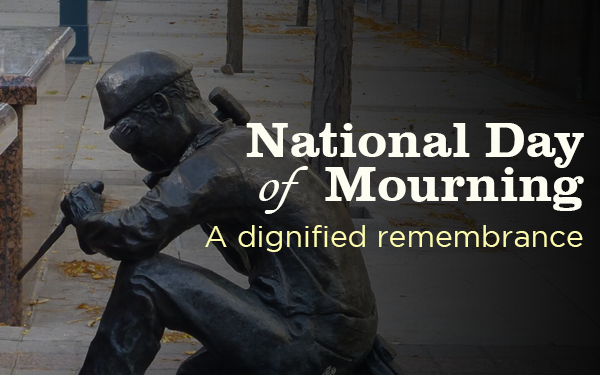
The second part of this monument is called The Anonymity of Prevention. This is a bronze sculpture of a man, dressed in work clothes and wearing full safety gear, kneeling on one knee and appearing to chisel into the wall of 100 Workers.

I could not take my eyes of the beautiful stonework that described the names, where they worked, and how they died on the job.

They had families, and I am most certain they expected to be home to those families each and every day after their work was completed.

I wish I had told the convention delegation of this find, three blocks from the hall, and felt a little guilty that I did not share an opportunity to mark our visit with a solemn procession and a dignified remembrance.

Let us go forth and always recognize April 28th, the national day of mourning for workers killed or injured on the job, and make more resolute our commitment as union activists to make our workplaces safe from any workplace hazards or occupational diseases.

To view photos of the Monument, please click here.

Respectfully Submitted,

Kevin King
National Executive Vice-President
Union of National Employees, PSAC


National Day of Mourning

DayOfMourning

By Geoff Ryan

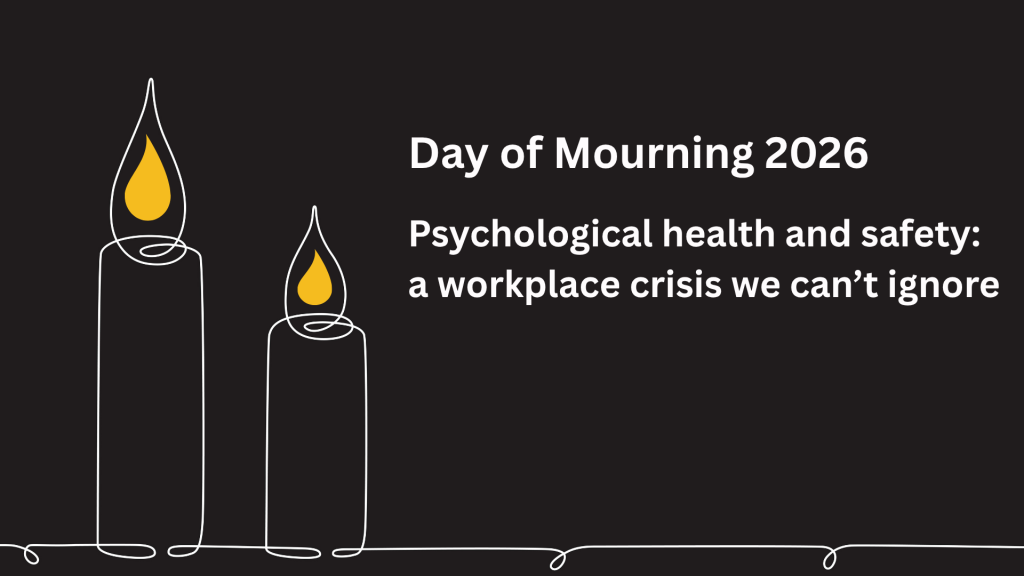
April 28 is the National Day of Mourning for Workers Injured or Killed on the job. On this day flags on government buildings will fly at half mast, and ceremonies will be held in communities across Canada. Workers will gather at these ceremonies, some will wear black arm bands, some will lay flowers or wreathes, candles will be lit and the names of workers who died due to workplace incidents and illnesses will be read. People will be asked to observe a moment of silence to remember and honour them.

It is important for everyone to attend these events, not only to remember those people who have died, but also to bring awareness that health and safety in the workplace needs to be improved in Canada.

Most people are aware of the dangers in using a power tool, but what about the dangers entering an office building? Did you know that asbestos exposure is the single largest on-the-job killer in Canada accounting for almost one third of all workplace death claims approved since 1996? Asbestos is in products such as brake pads and can also be found in pipes and insulation. Many countries have banned asbestos, but Canada has not. The government also has not cautioned citizens that even low levels of asbestos can be a carcinogenic health risk. There is no national database of buildings containing asbestos in Canada despite requests from unions to create one. Saskatchewan is the only jurisdiction in Canada with such a database. It was created with the passing of Howard’s Law.

The annual observance of the National Day of Mourning strengthens the resolve to establish safe conditions in the workplace, and prevent injuries and deaths. As much as this is a day to remember the dead, it is also a call to protect the living. I encourage everyone to participate in the Day of Mourning ceremony in their area and if there is not a ceremony in your area please consider having a moment of silence in your workplace.

Geoff Ryan is the UNE’s National Vice-President for Human Rights.

Labour Day or Leisure Day?

labourday

In their heyday, Labour Day parades were a sight to behold. People lined the streets to see floats that stood as monuments to workers’ individual contributions to society. This was a day when plumbers marched alongside firefighters, in a show of unity among the working class.

But Labour Day parades have always had to compete with one of its main goals: getting time off for leisure. Indeed, for many Canadians, Labour Day is more synonymous with a long relaxing weekend at the cottage than with the labour movement.

“The tension was built at the very beginning,” explained Professor Craig Heron, who teaches history at York University. “It was a celebration of labour that had an implicitly political twist and a day of pleasure.”

“How you keep those things working together is obviously an issue.”

Heron points out that Labour Day was alive and well before Parliament made it an official holiday. In The Workers’ Festival, a book he co-authored with Steve Penfold, Labour Day parades are traced back to the early 1880s, years before the day was officially recognized at the federal level in 1894.

“It was first celebrated in Toronto in 1882, Hamilton and Oshawa in 1883, London and Montreal in 1886, St.Catherines’ in 1887, Halifax in 1888, and Ottawa and Vancouver in 1887.”

Back then, workers were simply asking their local municipality to declare the day a civic holiday.

“Then they would just celebrate it. Workers would take the day off,” explained Heron. “In 1894, [Parliament was] just putting the legal stamp on a fait-accomplit.”

That precious time off was all the more important at the end of the 19th century, when workers didn’t have vacation time – when Saturday was part of your workweek.

“The one-day holidays – Victoria Day, Dominion Day and an August holiday in some parts of the country – those were your only holidays.”

Ultimately, Heron sees the movement for paid vacation as an extension of that initial request for the fall holiday.

With so little time off, Labour Day parades had stiff competition from the get-go. It wouldn’t take long for union leaders bemoan the fact that many chose to spend that day of leisure at the local tavern or pool hall instead. Soon, the labour movement would be competing against a host of other options for holiday fun, where market forces sought to fill a void.

Nonetheless, the parade would draw an impressive crowd. Onlookers could get a glimpse of a craftsman’s work and his tools of the trade. For workers, it was a chance to present themselves as essential cogs in a society of producers. For unionists, it was a show of force for the labour movement – one they hoped would draw more workers into their ranks.

But that would change over the years.

“Labour Day evolved,” explained Heron. “What Steve and I wanted to emphasize in the book was how it was reinvented a number of times.”

The parades of the 1940s were characterized by what Heron referred to as “a much sharper edge” – with fiery protests more akin to today’s May Day demonstrations. After the Second World War, there was an attempt to merge activism with old traditions.

“You’d put on a show that drew on the cultural elements that people expected to see in a parade; you added the clowns, you added the pretty girls in the short skirts,” explained Heron. “Those elements that now look frivolous to us, they co-existed alongside floats that asked ‘What’s going to happen as a result of automation?’ and ‘We need Medicare!’”

Gradually, as the labour movement entered more tumultuous years in the 1970s, the frivolous elements were dropped in favour of more protest activities.

Despite this state of flux, one thing remained constant: Labour Day parades were a grassroots effort, usually led by a local labour council.

In Ottawa, the Labour Day parade is organized by the Ottawa District Labour Council. With the big day just a few days away, Labour Council President Sean McKenny’s voice is already ringing with pride and excitement.

“Everything is free,” said McKenny, urging everyone to attend the festivities. “We have hot-dogs, corn on the cob, bags of chips, soft-drinks and juice for folks – we have a bouncy castle and pony rides.”

Ottawa has been home to a Labour Day parade for well over a century. In recent years, the festivities have followed a standard formula: everyone meets at city hall and marches to a nearby park, where the fun continues.

The event, McKenny contends, puts the emphasis on family and leisure over activism and protest.

“One of the things that we often say around here is ‘we have 360-some-other days of the year to protest and rally; this is a day when we’re going to enjoy ourselves and celebrate all our hard work throughout the year.”

McKenny argues that in Ottawa, the parade is far from dying out. After being involved with its planning for over 20 years, he says the level of participation has undoubtedly increased. Moreover, he hopes that the family-focused attractions will act as an extension of the Canadian Labour Congress’ campaign, which aims to paint a different portrait of unions – one that counters public perceptions of union members as radical and constantly being on strike.

In this vein, Labour Day festivities continue to be an important communications vehicle. In Heron and Penfold’s book, the authors declare that parades “were intended to convey powerful symbolic, largely non-literate messages about appropriate social and political values and acceptable social relationships.”

“In the 1880s-1890s, there were parades all the time in the streets,” explained Heron. “It was a way of communicating. You expected to see parades; you went and watched them. What was on display there, in terms of what people looked like, how they dressed, how they organized themselves, what they were carrying, what they were showing off – all of that was a mode of communicating to the crowd that was watching.”

But in the digital age, where messages can reach a broader audience regardless of their proximity to a downtown core, is there still a place for parades? Could resources be more wisely invested elsewhere?

Professor Heron contends that there is still something very powerful and visceral about people getting together for a public demonstration.

“I think this is part of the debate that everyone is having about social media,” he responded. “It’s a debate we’re having at the university level about online courses – what’s the value of bringing people face-to-face for anything?”

Instead of replacing the act of taking to the streets altogether, social media can be used to bolster that act. Professor Heron pointed to both Occupy and Idle No More as great examples of movements that used these tools effectively to garner more boots on the ground.

“There’s incredible power in having people standing together, walking together, finding each other in a face-to-face environment,” he added. “It can’t be experienced any other way.”

“It does make people feel proud and powerful and capable of greater things. That’s why I think, again and again, in strike situations and in protests, people come back to it as a way to show to the world that there are people who care and feel some solidarity.”

__________________

If this article has inspired you to get involved in your local Labour Day Parade, please contact your local labour district council. In Ottawa, they’re hoping to recruit another 10-20 volunteers.

This article relied heavily on information found in Craig Heron and Steve Penfold’s book, The Workers’ Festival: A History of Labour Day in Canada. Professor Heron is the author of several books on the Canadian labour movement, including The Canadian Labour Movement: A Short History. Incidentally, that book features a few UNE members on the cover!

Thank you to both Professor Craig Heron and ODLC President Sean McKenny for taking the time to speak with us.