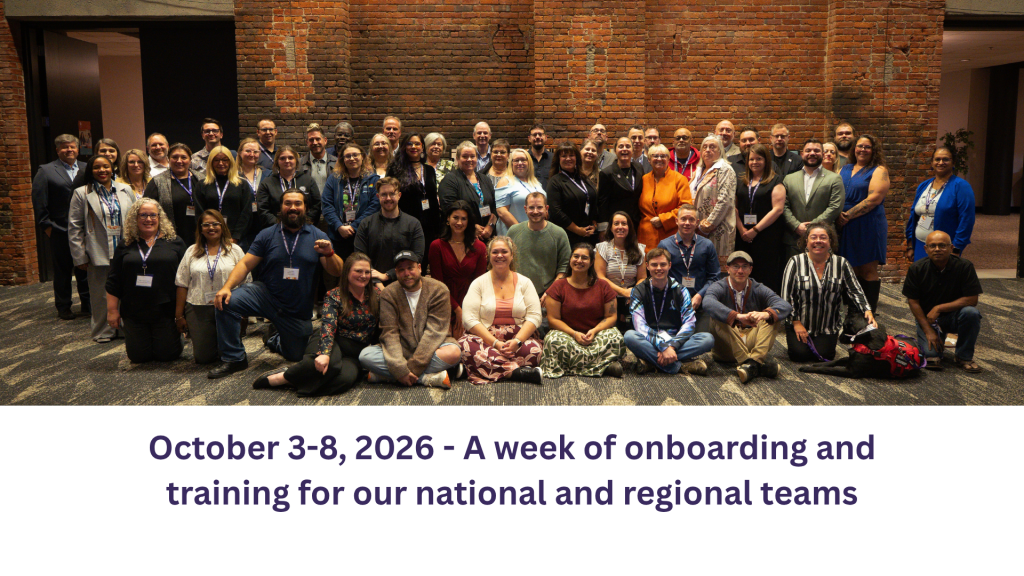
From October 3 to 9, UNE’s newly elected officers and staff gathered in Salaberry-de-Valleyfield for a full week of onboarding and training. Over the week, participants took part in sessions led by UNE staff, PSAC staff and the Joint Learning Program (JLP), which presented on health and safety. Sessions covered the roles and responsabiliites of elected officers and staff work together to serve our members. Beyond the training itself, the week was a chance to get to know one another and build strong working relationships for the term ahead and enjoy some karaoké.
Thank you to all participants and presenters for their energy and commitment.
With the National Day for Truth and Reconciliation approaching, there is an opportunity to share a meaningful message with UNE members about what this day represents and how we can continue walking forward together.
Truth and Reconciliation is more than remembering a difficult chapter in Canadian history. It is an ongoing journey of healing for Indigenous peoples, a journey that begins with truth, grows through understanding, and moves forward through respect, education, awareness, and meaningful relationships.
September 30 is a day to honour the children who never returned home from Indian Residential Schools, the Survivors who did, and the families and generations who continue to carry their stories.
The impacts of Residential Schools did not disappear when the schools closed. Healing takes generations, and reconciliation asks all of us to understand that history with compassion and to recognize that every person has a role in creating a better path forward.
Reconciliation cannot happen without truth. Healing cannot happen without understanding.
As union members, standing together is especially meaningful. Unions are built upon solidarity, the understanding that people should not have to stand alone when seeking dignity, equality, respect, and belonging. Those same values can help guide the journey of reconciliation.
Reconciliation does not belong only to Indigenous peoples. It is a shared journey. It can happen in our workplaces, schools, communities, and the relationships we build with one another. It happens when we listen. When we learn. When we create space for Indigenous voices and knowledge. When we choose understanding over judgment.
On September 30, UNE members are encouraged to wear orange in solidarity with Indigenous peoples, Residential School Survivors, their families, and the children who never came home.
Let orange represent remembrance, but also hope.
Let it represent our willingness to listen and learn.
Let it represent healing between peoples and generations.
Let it remind us that reconciliation is not something completed in a single day. It is something we continue to build together, one relationship, one conversation, and one act of understanding at a time.
Every Child Matters: yesterday, today, and for generations to come.
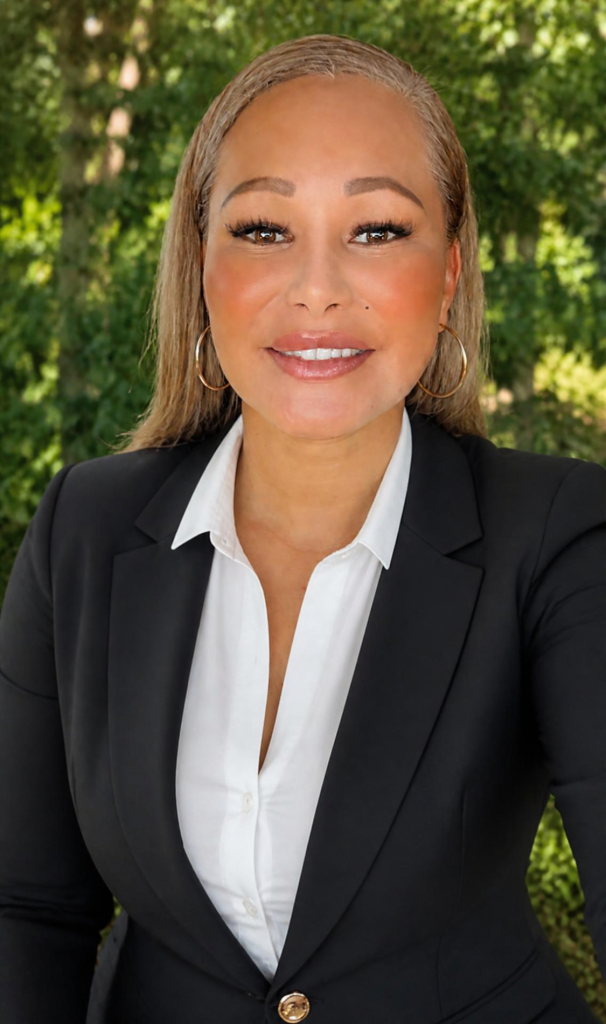
Carmen Poitras
Carmen Poitras, a dedicated member of UNE Local 30202, lives in Cold Lake, Alberta, where she is the mother of three children and the principal of the province’s only federally operated school.
Deeply committed to advancing Indigenous education, Carmen is currently pursuing a doctorate in this field. Her long-term vision is to expand access to distance learning and create greater opportunities, equity, and educational accessibility for Indigenous learners and those living in remote communities. Through her leadership, dedication, and commitment to education, Carmen continues to help build pathways for future generations.
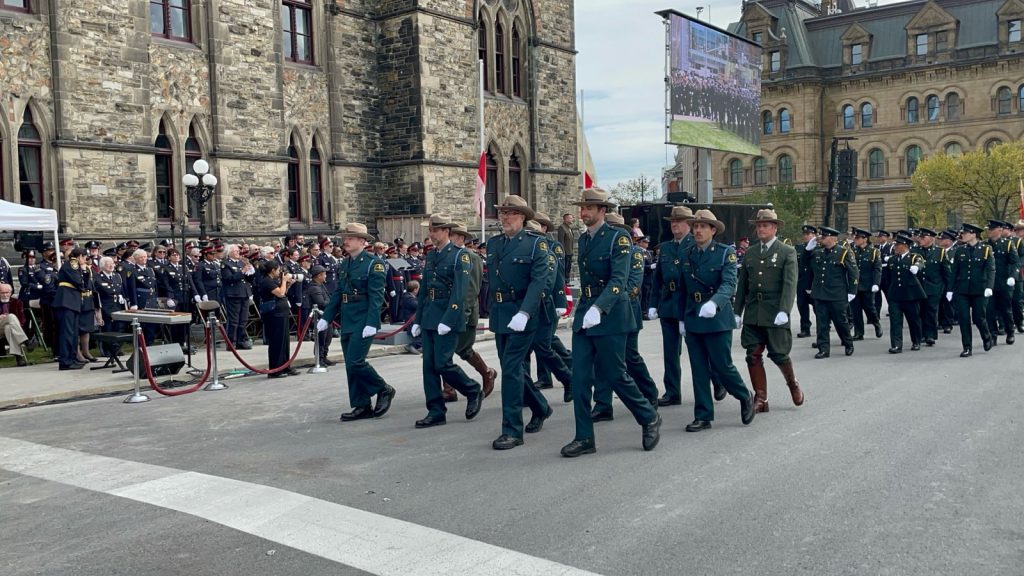
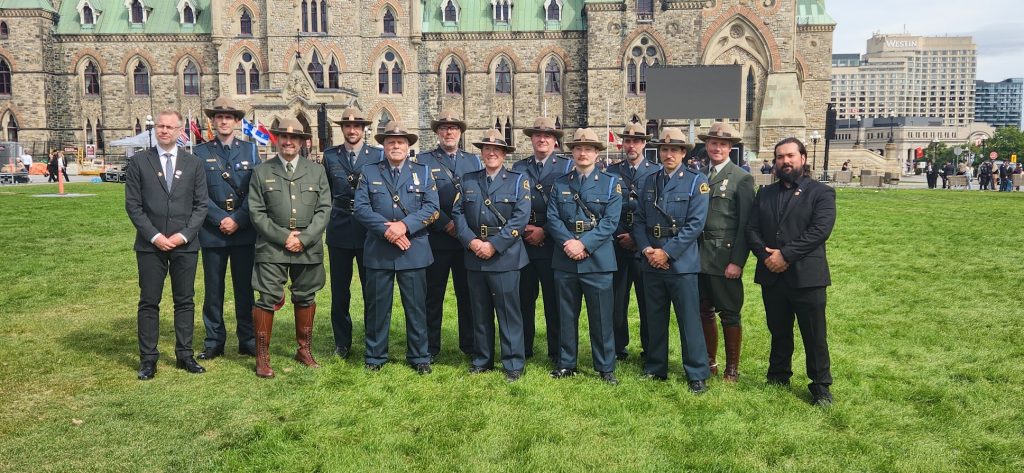
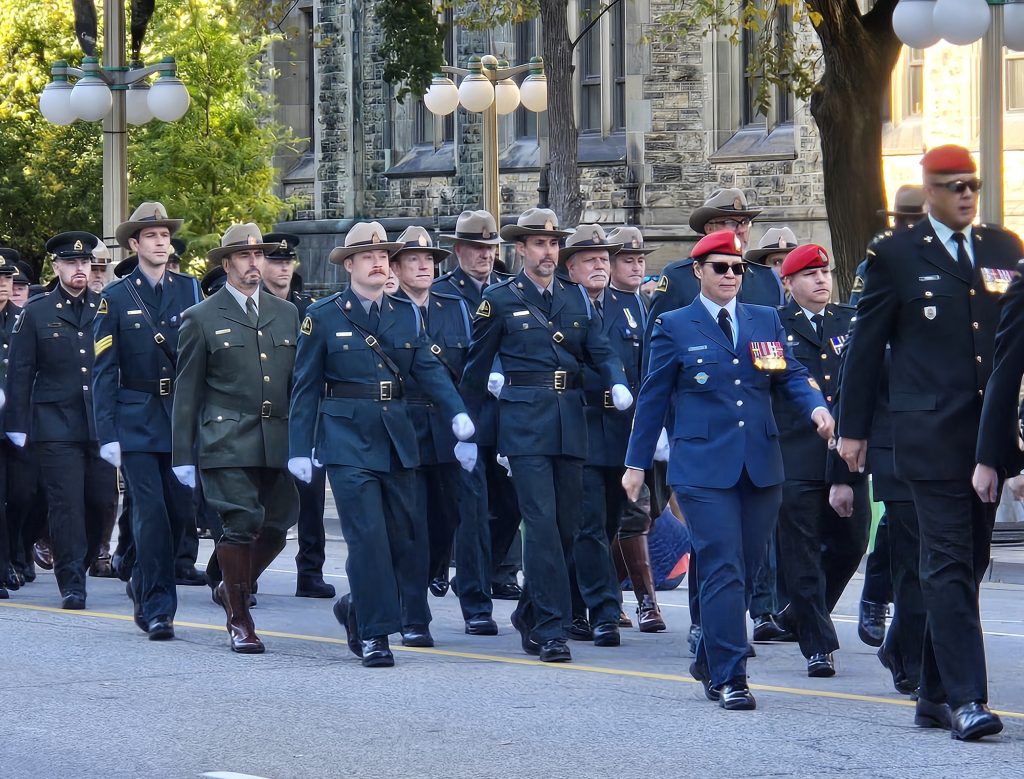
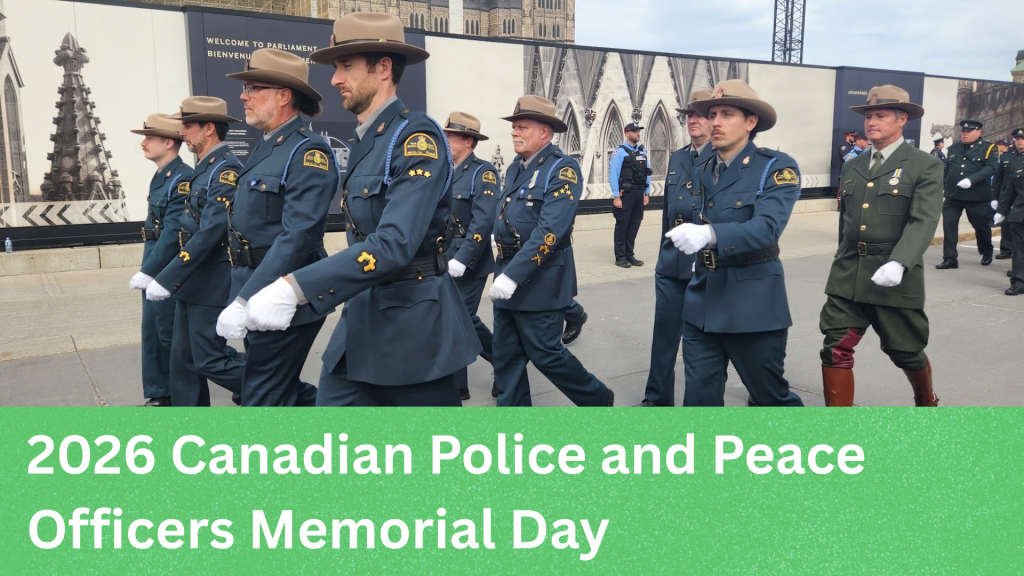
Yesterday, hundreds gathered on Parliament Hill in Ottawa for the Canadian Police and Peace Officers’ Annual Memorial Service, honouring police and peace officers across Canada who were killed in the line of duty.
It was also a moment to thank everyone who works every day to keep our communities safe.
Among them are park wardens, the law enforcement officers of Canada’s national parks and historic sites. They are also proud members of the Union of National Employees.
This year, five wardens were chosen to represent the Park Warden Service in Ottawa:
– Hugo Royer (10269, La Mauricie-West)
– Sean Williams (80020, Kejimkujik)
– Daniel Forbes (00041, Bruce Peninsula)
– Thomas Robinson (20106, Glacier and Mount Revelstoke)
– Kevin Valdes (40107, Waskesiu Lake)
“I am grateful to have been invited to attend yesterday’s ceremony on Parliament Hill honouring peace officers, alongside UNE Trustee Alex Silas. It was an opportunity for me to gain a better understanding of the essential role played by our Parks Canada wardens, the realities of their work, and the labour relations issues they face. Their dedication deserves not only to be recognized, but also to be supported in concrete ways, and I intend to continue this dialogue with them in the months ahead.”
— Jean Michel Lavergne, National President, Union of National Employees
In September, the PSAC bargaining team representing Parks Canada workers tabled new proposals recognizing the first-responder duties of park wardens, wildland firefighters and visitor safety personnel, including improved mental health support and leave for employees who experience critical incidents. Talks resume December 2–3. Read the latest Parks Canada bargaining update.
To all park wardens and peace officers: thank you for your service.
Our PSAC bargaining team met with Parks Canada on September 9 and 10 to continue negotiating a collective agreement that reflects the complexity of the work our members do.
We tabled new proposals recognizing the unique responsibilities carried out by park wardens, wildland firefighters and visitor safety personnel, who all perform first-responder duties. These roles can involve demanding, high-pressure, situation, from wildfires and search and rescue operations to medical emergencies, often in remote locations with limited backup. Our collective agreement must reflect that reality through proper recognition, support, and protection.
Our priorities at the table
We are seeking improvements that would:
Align Parks Canada policies with the National Joint Council directives
Improve overtime, standby and call back pay provisions.
Give employees greater flexibility in hours of work.
Create new allowances to support employee fitness and well-being.
Improve mental health support and provide leave for employees who experience critical incidents.
Recognize the important work of our members, including those with first-responder duties.
Ensure members who cannot take their scheduled lunch breaks are paid for the time they work.
We continue to press the employer to address job precarity, which affects approximately 43% of Parks Canada’s workforce, including term, casual and student employees.
The employer responded to only a handful of the proposals we tabled last round and has yet to answer most of our demands. We’ll keep pushing for meaningful answers and real progress on the issues that matter to our members.
What happens next
Our bargaining team returns to the table with Parks Canada on December 2–3, where we’ll continue to press for responses to our outstanding proposals.
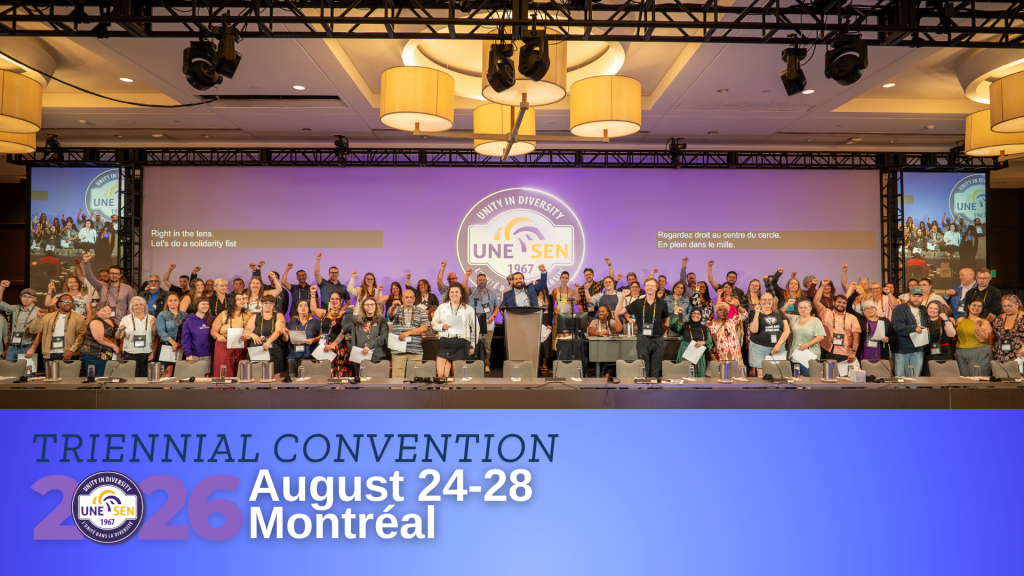
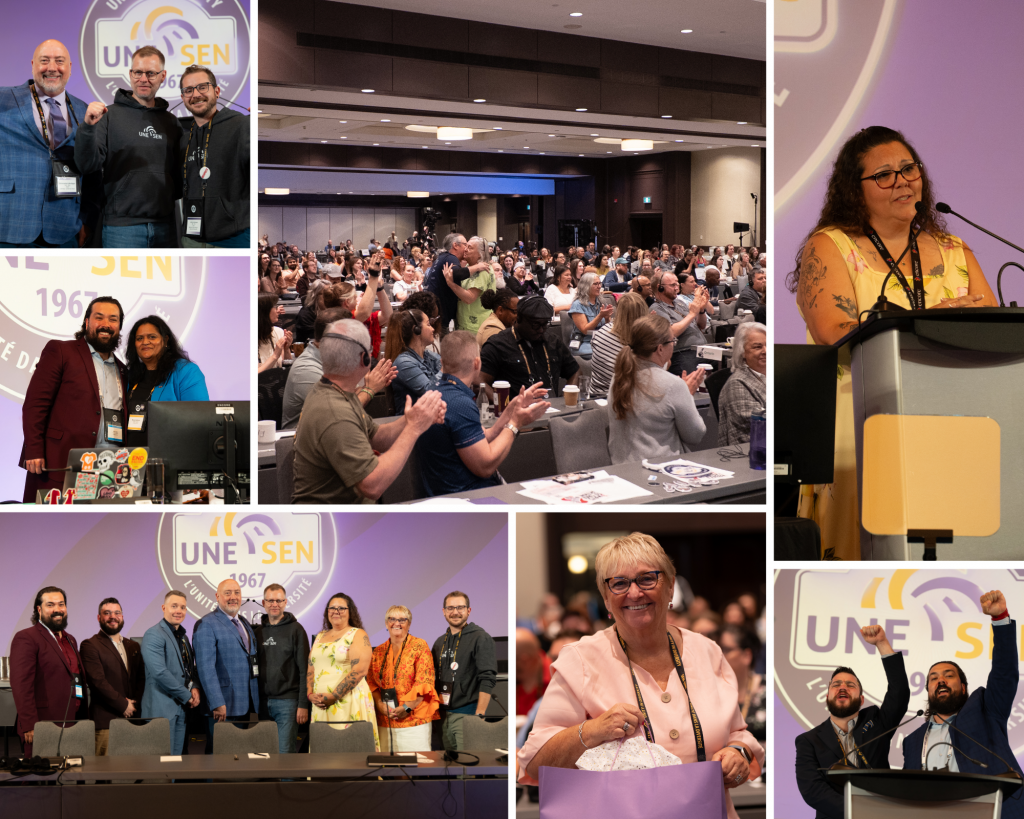
All elected members during convention in all UNE regions swearing in, on Friday August 28, 2026.
Delegates gathered at the Union of National Employees (UNE) triennial convention and elected the National Executive and Regional Vice-Presidents for the next three years.
National Officers Elected
National President: Jean-Michel Lavergne
National Executive Vice-President: Chris Little-Gagné
Vice-President, Human Rights: Mylène Seguin
Vice-President, Occupational Health and Safety: Ellen Cross
New configuration of the National Capital Region
The convention also adopted a new distribution of the National Capital Region (NCR), which is now divided into five sectors: Ottawa Center, Ottawa North, Gatineau Center, Gatineau South and Separate Employers.
Regional Vice-Presidence
– Saskatchewan : Nathan Pylypuk
– Quebec: Éric Drouin
– Gatineau-Center: Éric Poitras
– Gatineau-South : Christine Savard
– Ottawa Center: Cindy D’Alessio
– Ottawa-North: Shawn Walker
– Separate Employers: Anna Braddon
– Ontario: Michelle Woods
– Manitoba: Cheryl Dubree
– British Columbia and Yukon: Trevor Makela
– Atlantic: Angela Decker
– Alberta, Northwest Territories and Nunavut: Cheryl Carty
Start date
The mandate of the new National Executive will be guided by continuity: to continue the rigorous work accomplished under trusteeship, to maintain service to members, and to ensure that the progress made becomes a lasting achievement for all members of UNE.
Given the progress made, UNE Trustee, Alex Silas, is confident that he will be able to propose the lifting of trusteeship to the PSAC National Board of Directors in the coming months, so that the newly elected executive can begin its 2027-2029 term next January.
Here is a quick recap of UNE 2026 Triennial Convention first days:
Sunday — Getting started
Delegate training, the first regional caucuses, and the presentation of the 2025 financial statements got convention off to a great start during the pre-convention day.
Monday — Day 1
Registration, welcome remarks from the trustee, a moment of silence, and the official kickoff of convention! Sharon’s speech got everyone in great spirits. In the afternoon, delegates headed to the demonstration by Sir George-Étienne Cartier House, a Park Canada site — the rain didn’t hold back, and it turned into a powerful moment of solidarity for all our bargaining tables. Back in the room, delegates got to work on resolutions.
Tuesday — Day 2
Delegates adopted the budget proposed by the pre-convention finance committee, then dove into bylaw resolutions — tough work, but work that will pay off. The room was also energized by an inspiring speech from our special guest, Larry Rousseau. Later in the day, the chair acknowledged the passing of Dolly Parton, and the whole room came together to sing 9 to 5 in her honour.
Wednesday — Day 3
The last day devoted to resolutions, and a lot got done! UNE now has 12 regions:
Atlantic: the provinces of Nova Scotia, New Brunswick, Prince Edward Island, and Newfoundland and Labrador.
Quebec: the province of Quebec, except Gatineau.
Ontario: the province of Ontario, except Ottawa.
National Capital Region (Separate Employers): all non Treasury Board employer locals in the NCR.
Manitoba: the province of Manitoba.
Saskatchewan: the province of Saskatchewan.
Alberta, Northwest Territories and Nunavut: the province of Alberta, the Northwest Territories and Nunavut, including Kootenay and Yoho National Parks.
British Columbia and Yukon: the province of British Columbia and Yukon Territory, except Kootenay and Yoho National Parks.
National Capital Region – Gatineau South (Treasury Board): Locals 70044, 70125, 70172. 70263, and 71200
National Capital Region – Gatineau Centre (Treasury Board): Locals 70027, 70101, 70148, 70312, 70404, and 70410
National Capital Region – Ottawa Centre (Treasury Board): Locals 70059, 70160, 70176, and 70380
National Capital Region – Ottawa North (Treasury Board): Locals 70151, 70130, 70181, 70342, and 70381
A round table featuring Craig Reynolds, Mary-Anne Walker, Doug Marshall, and Ruth Lau MacDonald sparked great discussion among delegates, who worked through all the resolutions — including the young workers’ resolution, confirming the UNE Young Workers Committee. The day wrapped up with Dolly Parton songs filling the room.
All delegates had the opportunity to hear from the candidates for the national positions on Wednesday evening. Election day is here: president, vice-presidents, vice-president human rights, vice-president health and safety, plus all alternate, assistant, and regional VP positions. We can’t wait!
Before we wrap up our journey to Convention, there is one last thing every delegate should know: the Rules of Order.
If you are a first-time delegate, the rules may seem a little intimidating at first; even if you have attended Convention before, a quick refresher never hurts.
We encourage everyone to attend New Delegate Training on Sunday, August 23, from 9:00 to 10:30 a.m. It is a great opportunity to review how Convention works, ask questions and get comfortable with the process.
Why do we have Rules of Order?
Rules of Order give everyone a fair and consistent way to participate in debate and make decisions.
UNE generally follows the PSAC Rules of Order, which establish the basic framework for speaking, making motions, debating and voting. UNE’s own governing documents also provide rules that apply specifically to UNE proceedings and Convention.
At Convention, delegates wishing to speak go to the microphones and wait to be recognized by the Chair.
One of the UNE Convention practices you will notice is the use of a PRO microphone and a CON microphone. This helps ensure that different sides of a question can be heard and that debate remains balanced. When you are recognized, identify yourself and the body you represent, then clearly state why you are speaking.
PSAC’s Rules of Order provide for three-minute speeches. Keep your remarks focused on the question before Convention and respect the time available to other delegates.
Motions and amendments
Much of Convention business moves through motions and amendments.
A motion puts a question before Convention. An amendment proposes a change to that motion.
You do not need to memorize every procedural rule. Your delegate binder and the Convention team are there to help, and the Chair will guide the floor through the process. The Chair’s role is to ensure that the rules are followed, that debate remains orderly and that delegates have a fair opportunity to participate. If you are unsure about a procedural matter, listen to the Chair’s instructions or raise the appropriate point of order.
The most important rule? Participate.
Listen to the debate. Read the resolutions. Ask questions. Speak when you have something to contribute. Respect different points of view.
If you are a young worker or this is your first Convention, don’t be shy. Your perspective matters, and your voice belongs in the room.
This is the final article in our Journey to Convention 2026 series. We hope these articles have helped you understand Convention, prepare for your role and feel ready to take part.
Have a great Convention. Participate, share your perspective, listen to others — and help shape the future of UNE.
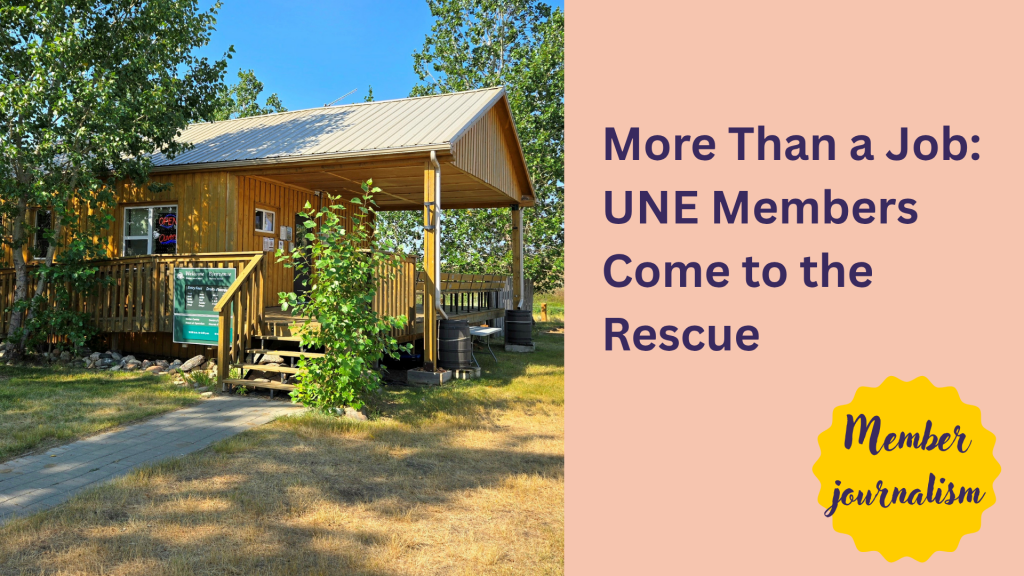
UNE members go above and beyond in Grasslands National Park. UNE is proud of the work our members do every day, often well beyond their job descriptions. The story below is one powerful example: on the August long weekend, three members at Grasslands National Park’s East Block stepped up to rescue and care for a visitor experiencing heat stroke on the trail. This account was written by Alex Goatcher, shop steward, Grasslands National Park East Block.
“On the Saturday of the August long weekend (August 1, 2026) at noon the Rock Creek Campground in Grasslands National Park East Block got a call from someone on the 1000 Devils Trail that their mother cannot continue the hike due to the extreme heat (50C on the trail, no wind) and needed to be rescued. Andree and I (the Visitor Services Attendants) at East Block contacted Trish (Visitor Facilities Attendant) and Juanita (Maintenance Worker) that a rescue needs to be done and as we waited for their arrival, we prepped the campground’s side-by-side and the reception centre for the operation. Trish and Juanita arrived, left on the side-by-side to the trail, found the party, and brought them back to the campground reception centre, where Andree helped the visitor in distress into the shower in the building to cool her off because she was showing signs of heat stroke, also her dog was showing signs of heat related distress and was given water and put near an air conditioning vent. Andree recognized the signs of Heat Stroke instantly and told me to call for an ambulance.
Due to the quick response of Trish, Juanita, and Andree, by the time the ambulance arrived (1.5 hours after the 911 call) the visitor was no longer showing signs of heat stroke and was already recovering from the incident. Trish, Juanita, and Andree’s primary work responsibilities are not “visitor safety” nor “first responders” but Trish and Juanita are trained in Wilderness First Aid by Parks Canada and Andree is trained as a Community First Responder by the local Paramedic Organization. Trish, Juanita, and Andree all went beyond their everyday call of duty to help someone who could have possibly died in the heat if this visitor had to wait for professional emergency rescue personnel.”
Alex Goatcher, Shop Steward, Grasslands National Park, East Block
Do you have a story to share? Stories like this one are a reminder of just how amazing UNE members are, often doing incredible work that goes unseen. We want to hear more of them. If you or someone on your team has a story you would like to share, reach out to Communications at Communications@une-sen.org.
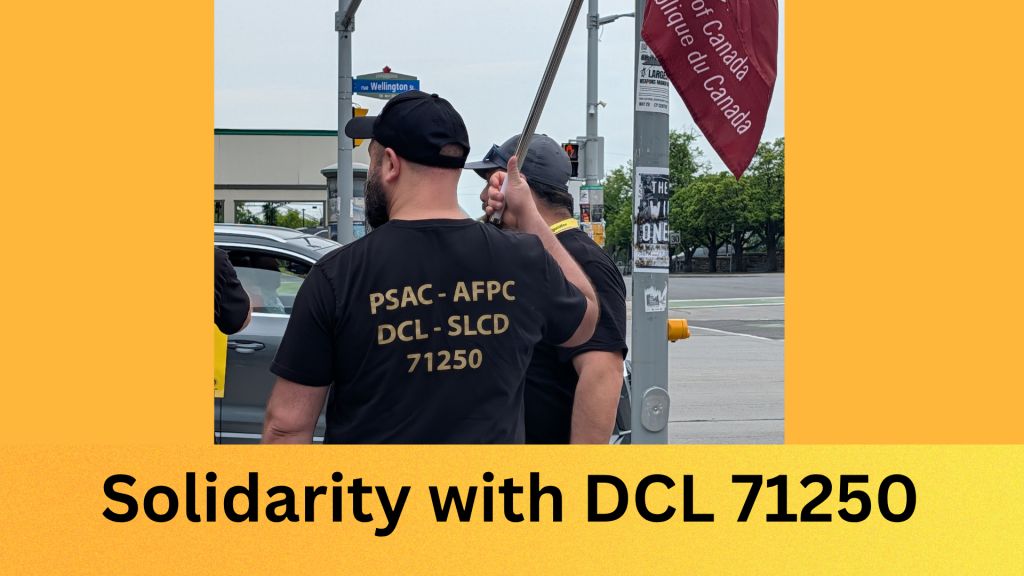
UNE is donating $1000 to the Ottawa picket line of PSAC Directly Chartered Local (DCL) 71250, representing striking security officers at the Bank of Canada.
Since June 23, these officers have held the line after years of failed negotiations. Rather than bargain in good faith, the Bank turned to replacement workers. The Canada Industrial Relations Board has twice ruled in the workers’ favour, ordering the Bank to stop.
Our donation will help support the Ottawa picket line and top up members’ strike pay.
We also invite our members to support DCL 71250 directly:
Convention brings together delegates from across the Union of National Employees to make decisions that will help guide our union for the next three years.
But what exactly does it mean to be a delegate? And how does Convention move from discussion to decisions?
Here is what you need to know.
Who do we call a delegate at UNE?
Delegates are members of the National Executive as well as members who have been selected to represent their local section, the young workers in their region, or their equity group.
While every UNE member has a stake in the future of our union, delegates have an important responsibility at Convention: they participate in debates, vote on the business brought before Convention and elect the national leadership of UNE.
They bring with them the perspectives and priorities of members from their Locals and regions, making Convention a place where voices from across UNE come together.
How Does Convention Business Work?
A large part of Convention is dedicated to considering resolutions submitted by Locals, committees and other bodies entitled to submit them under UNE’s governing documents.
Before Convention, resolutions are reviewed by the appropriate pre-Convention committees. Committee members examine and debate each resolution and make recommendations on how Convention floor should deal with it.
Delegates then have the opportunity to debate the issues before making a decision through a vote. This process allows proposals to move from an idea raised by members to a decision made collectively by Convention.
From Resolutions to Decisions
When a resolution comes before Convention, delegates consider both the proposal itself and the recommendation of the committee that reviewed it.
Delegates may speak to the issue, debate it and, where permitted under the Rules of Order, propose changes before voting.
Once Convention has made its decision, that decision becomes part of the direction given to UNE for the next three years. That is why Convention business matters: they help shape the work and priorities that follow.
Electing UNE’s National Leadership
Convention 2026 will also include the election of UNE’s National Executive.
This is another important responsibility entrusted to delegates and another way Convention directly shapes the future of the union.
Your Role as a Delegate
Being a delegate means being an active participant in Convention.
That means coming prepared, reviewing Convention materials, listening to different perspectives, participating in debate and voting on the decisions before you. To help you make the most of your role as a delegate, we have put together a Convention binder with the key information and resources you will need throughout the week — including the agenda, Rules of Order, committee reports, allergen notices and more. Think of it as a tool to help you stay informed, prepared and ready to participate.
If you are a young worker or attending Convention for the first time, don’t be shy about taking part. Convention benefits from different experiences and perspectives, including those of members participating for the first time. Your point of view matters, and your voice belongs in the discussion.
Every debate, every vote and every decision contributes to the collective direction of UNE.
Delegates make decisions on behalf of UNE members and help determine the direction of our union for the next three years.